 |
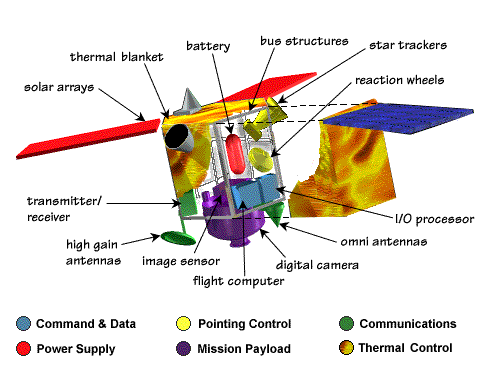
Science of Satellites: How They Work In order for a satellite to work first it must be launched into space. A rocket, also called a launch vehicle, is used to project the satellite off of the Earth’s surface and into an orbit around the Earth. The rockets consist of three different portions: the first stage, second stage, upper stage, and the fairing. The first stage contains the fuel used to initially lift the heavy rocket off of the ground and begin to send it to space. After this job is complete the first stage breaks off of the rocket and falls back to Earth. The second stage has smaller less powerful rockets that continue to send the satellite to its desired position in space. Once the satellite has burned up the fuel from the second stage it also breaks off and the upper stage of the rocket which contains the satellite moves closer to its desired location. Once the satellite reaches where they were sending it the fairing opens up and the satellite separates from it. The satellite then opens up exposing the solar panels and communication antennas. The satellite picks up radio signals from a transmitting station on Earth, this is called an uplink. This signal is then converted and bounced back towards earth to a receiving station which is called a downlink. The area between these points that a satellites information can be transmitted to is called a footprint. This is how satellites can pick up information from one point in the form of a radio signal and spread it to a large area.
|
